- Books
- #Booktok
- Special Editions
- Manga
- Autographed
- Bibles
- Kids
- Young Adult
- Vinyl Records
- Adult Collectibles
- Toys & Games
- Gift Shop
- Sale
|
The New & Used Marketplace books come from different sellers throughout our network. Each book has a description that was provided by the seller, so you will find variations in how each book is described.
Below are some of the common abbreviations and terms you may find, along with at general guide to various condition ratings, and information on returning items from the Marketplace. Keep in mind that each book is unique and the individual characteristics and conditions will vary. | Shipping | Return Policy | Condition Guide for the New & Used Marketplace | Common Abbreviations | Book Sizes | New & Used Marketplace
Tracking of shipment is not available on products purchased from our New & Used Marketplace. Click here for special return instructions Specialty Shipping
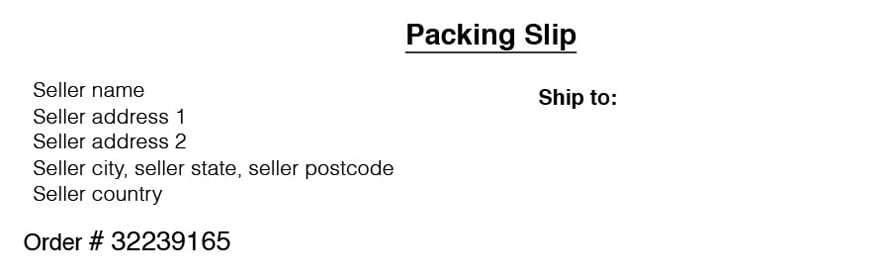
Tracking of shipment is not available on products purchased from our New/Used Marketplace. Special return instructions apply. Returning a purchase from the New & Used Marketplace is easy. Simply follow the instructions below: Step 1:
Example: Step 2:
Example Order: Back To Top Items marked as "non-returnable" are provided to us via a third-party vendor that does not allow product returns. Therefore, we are unable to accept any customer returns of such items or issue any refunds. Please review your purchase of this item as all sales of non-returnable items are final. Back To Top
Back To Top A.D.: Autograph document A.D.s.: Autograph document, signed Ads, adverts: Advertisements A.E.G.: All Edges Gilt A.L.: Autograph letter A.L.s.: Autograph letter, signed A.M.s.: Autograph manuscript, signed auth: author bce: book club edition bd.: bound bdg.: binding bk: book bks: books bkpl: bookplate bkstrp: backstrip BMC: British Museum Catalog brk/brok: broken buck: buckram C. & p.: Collated and perfect ca.: circa, approximately cat: catalog CBEL: Cambridge Bibliography of English Literature chip/chp: chipped cl: cloth col: color conts: contents cpy: copy cv: cover DAB: Dictionary of American Biography dec/decor: decorated, decoration dict: dictionary disb: disbound dj: dustjacket DNB: Dictionary of National Biography (British) doc.: document dw: dustwrapper ea: each ed: editor edn: edition Eng./Engl.: English eng./engr.: engraved ex-lib/x-lib: ex-library ep: endpaper F./ff.: Folio, folios (leaves) facs: facsimile f/o: fold out front: frontispiece fwd: foreword fx: foxing grn: green hc: hardcover hf.: half (as in half sheets) hist: history hndbk: handbook hng: hinge ill/illus: illustrated, illustration Imp.: Imperial impft: imperfect ins: inside inscr: inscribed intro.: introduction Ital.: italic letter lea.: leather lf: leaf lge.: large lith: lithograph L.p.: large paper LS: letter, signed ltd: limited mag: magazine M.e.: marbled edges Ms/Mss: manuscript(s) mssg: missing mrbld: marbled N.d.: no date N.F.: Near Fine N.p.: no place N.s.: Note, signed N.V.G.: Near Very Good Ob./obl.: oblong oct: octavo OED: Oxford English Dictionary op: out-of-print orig.: original o/w: otherwise pamph: pamphlet pb: paperback pc: price clipped P./pp.: page, pages pg: page photo: photograph pict: pictorial Pl, pls: plate, plates po: previous owner pol.: polished port: portrait p., pp.: page, pages prc clpd: price clipped (from dustjacket) pref: preface prelims: preliminary leaves pres: presentation copy prev: previous priv prntd: privately printed pseud: pseudonym(ous) pt.: part pub: published or publisher rbkd: rebacked reprd: repaired rev: revised sc: soft cover sgd: signed sig: signature slpcs: slipcase sl: slight sm: small sp: spine spr: sprinkled sq: square STC: Short-Title Catalog stns: stains swd: sewed T.E.G: top edges gilt T.L.s: Typed letter, signed tp: title page trans: translator TS: typescript unb/unbd: unbound vd/vy: various dates, various years vol/vols: volume(s) w.a.f.: with all faults w/: with w/o: without wn: worn wr: wear wrap(s): wrappers, paperback wt: weight yr: year Back To Top All sizes are approximate. 4to, Qto.: quarto size (9" x 12" or 22.9cm x 30.5cm) 8vo, Oct.: octavo size (6" x 9" or 15.2cm x 22.9cm) 12mo: duodecimo size (5" x 7 .5" or 12.7cm x 19.1cm) 16mo: sextodecimo (4.25" x 6.75" or 10.8cm x 17.2cm) 24mo: twentyfourmo (3.5" x 6" or 8.9cm x 15.2cm) 32mo: thirtytwomo (3.25" x 5" or 8.3cm x 12.7cm) 64mo: sixtyfourmo (2" x 3" or 5.1cm x 7.6cm) Atlas folio: 16" x 25" or 40.6cm x 63.5cm Elephant folio : 14" x 25" or 35.6cm x 63.5cm Folio (Fo., Fol.): 12" x 15" or 30.5cm x 38.1cm Back To Top advance reading copy - A preview or early review copy of a book that is usually sent to book buyers, reviewers, booksellers, book clubs, and/or publisher sales representatives before the book is published. It could be in a different format, uncorrected, not bound, and/or have a different cover design than the publication issue. The typical publishing process is proof, advance reading copy, and publication. all edges gilt (aeg) - All three outer edges of the pages of the book have been trimmed smooth and coated with gold leaf. Americana - A classification of books and other objects having to do with American culture, history, or folklore. Considered different from a book written by an American writer, though an American writer can write an Americana book. annuals - Books that are published yearly. armorial binding - A leather binding stamped with a coat-of-arms. artificial leather - See imitation leather. as issued - The book is in the original physical state that it was published in and has all its original components including its binding, text block, illustrations, etc. as new - Refers to the condition of a book; it is immaculate and without flaws. See also mint. association copy - A book that was either owned by its author, owned by someone connected to the author, or owned by someone connected to the contents of the book. It can also refer to a book that was annotated by the author. Proof of the association is usually in the form of some written notes. Back To Top backstrip - The covering of the book spine that has the title and author of the book printed on it. It is usually made of cloth, leather, or paper, and is sometimes decorated. See also spine. backstrip label - See label. bastard title - See half-title. bevelled boards - See bevelled edges. bevelled edges - A binding technique in which the edges of the boards of the book have been cut to a slanted angle. Also known as bevelled boards. binding - The process that secures the pages or sections of a publication to keep them in order and to protect them. Binding may be stapled or sewn, sewn and enclosed in wrappers, or by gluing the pages to the outer cover, but most often refers to a hardcover binding. The art of bookbinding has its own fascinating history; knowing the basic chronology of bookbinding history can be an aid in dating undated material and help in the detection of fraudulent material. See also perfect bound. binding copy - A book that is worth re-binding; the book covers are in serious disrepair, but the text is fine. blank leaves - See blanks. blanks - Refers to a blank page that is left intentionally in the book. It can be located at beginning of the book, at the end of a clearly marked division, and/or at the end of book. Also known as blank leaves or printer's blanks. blind stamp - A colorless impression that is embossed on paper or on a cloth or leather binding. When it is found on a page, it typically signifies the owner's name or the words "Review Copy." When it is found on the binding, it is typically for decorative purposes. Also known as blind. board book - A durable book format that is used for children's books, in which all pages are printed on thick cardboard. boards (bds) - The front and back covers of a hardbound book. The term originates from when book covers were made from wood, but they are now typically made a stiff cardboard or paperboard. See book anatomy section for illustration. bonded leather - A material consisting of two layers of leather and a lining attached to each other by a chemical process or adhesive. book block - See text block. book club edition (bc, bce) - A book that was printed specially for a book club (e.g. "Book of the Month Club") which usually utilizes a lesser quality paper and binding materials. These editions are usually available by book club subscription only and are generally of little interest to collectors due to their low monetary value. book jacket - See dust jacket. bookplate - A simple or elaborately designed label used to indicate ownership, which is usually found pasted to the inside of the front cover of a book. Bookplates were used as early as 1516, but did not become popular in England, France, and Germany until the 18th century. In America, they were not used before 1800 but have been fairly common since about 1840. bright copy - Refers to the condition of a book; a surprisingly bright or fresh copy of an older book. It is as new and clean as the day it was published. broadside - A sheet of paper, usually of a larger size, that is printed on one side only. Examples include songs, poems, announcements of sales, and political declarations. buckram - An inexpensive stiff cotton fabric that is used to bind books. It is often used in library editions because of its strength. bumped - Refers to the condition of a book; it refers to worn, bent, or rounded corners of the boards of a book. Back To Top calf - Leather made from a calf hide or cattle hide, it is the most common type of leather used for book binding. It may be dyed nearly any color. cancel - A publisher-authorized content correction that is made after a book has been printed and bound. Cancels can be as small as a scrap of paper to correct type, or as large as a page or a signature to correct a section. The corrected page or illustration is glued onto the page or inserted into an already bound book. They are less common today because of advanced computerized printing techniques, but were very common in the 17th and 18th centuries due to numerous printer errors. Also known as tipped-in. card covers - See paperback. chapbook - A small book or pamphlet, often a collection of poetry or prose. Previous to the mid-19th century, the term was used to describe small books of popular, sensational, juvenile, moral, or educational content sold by street merchants, known as "chapmen." chipped - Refers to the condition of a book; a mark or flaw caused by scuffing, gouging, or breaking off of a small piece of the dust jacket, pages, or backstrip. chromolithography - A printing process that is done by printing in colors from a series of lithographic stones or plates. Noted for its fresh, bright colors, this process was popular during mid and late 19th century bookmaking. cloth - A book that is bound and covered in cloth. See also hardcover. cocked - Refers to the condition of a book; the spine is no longer straight and appears crooked or twisted. Also known as spine lean. cockled - Refers to the condition of a book; the wrinkled, puckered, waving, or curling condition of a page or of the boards of a book, which is caused by non-uniform drying and shrinkage. If the cockled page is made of vellum, the condition is caused by humidity. In the case of paper or board, the condition is caused by heat and humidity. In the case of book covers, it can be caused by the use of the wrong type of adhesive or too much adhesive. collated - The content of the work, including all pages and illustrations, has been examined and verified that it is complete and in the proper order. colophon - A printer's reference at the end of a book which usually gives the place of printing, name of the printer, and other details about the book. See also imprint. compartments - Ruled lines forming a square border or frame on a binding, which is done in gilt or blind. Also known as pannelled. contemporary - A term used to describe a work that was published within the last decade or to indicate that all of the components of the book (the binding, the coloring of plates, inscriptions, and side notes) were created at the same time the book was printed. cracked - Refers to the condition of a book; there is a long narrow opening or break down the spine or in the cover. crimped - Refers to the condition of a book; a grooved, indented, or pinched condition of a cover or page, which is caused by extreme humidity. It can also describe a bookmaking process that bends the hinges of loose-leaf books so that the pages of a book will easily turnover and lie flat. cropped - The margins of the book have been trimmed by the binder, usually too close to the text or into the text. cut - An illustration that is printed on a text page. See also plate. Back To Top deckle edges - The natural rough and uneven edges of book pages when they have not been trimmed flush. The binding of handmade paper can also produce this decorative effect. Also known as uncut. dedication copy - A copy of a book specifically inscribed by the author to a particular person. dedication page - The page of a book that lists the persons and/or institutions to whom the author has committed the work. It is usually located opposite the copyright page. de luxe edition - See edition de luxe. dentelle - A decorative lace-like pattern on the inner edge of a book cover that is inspired from embroidery and the decorative arts. This binder's technique was used primarily in France in the 18th century. device - Refers to a printer's mark or imprint that was used primarily in the 16th and 17th centuries, typically found on the title page or at the end of a book. Today the term can also be used to describe a publisher's trademark or logo. Also known as printer's mark. disbound - A book, pamphlet, or ephemera that is lacking its binding. doctored - A book that has been repaired, restored, or even added to. Also known as made-up. dummy - A mockup of a book that is created to represent the physical appearance, including actual arrangement of the printed matter and illustrations, of a forthcoming book to book buyers. Modern trade publishing has replaced the use of dummies with materials such as advance reading copies and uncorrected proofs. dust jacket (dj) - A removable paper wrapper that encloses a book to protect it from dirt. Dust jackets date from the early 19th century, but they came into more common use in the early 20th century as a means to advertise the book to potential buyers. Also known as dust wrapper or book jacket. dust wrapper - See dust jacket. Back To Top edition - All copies of a book that are printed from the same plates or one setting of type. An edition can have more than one printing. For example, if 300 copies of a book are printed on September 15, and 200 copies are printed from the same plates on November 24, all 500 copies are part of the same edition. edition de luxe - An edition of a book that has been specially printed and bound for its fine appearance. Sometimes refers to limited editions with special leather or decorated cloth bindings. edges - The top, bottom, and un-hinged outer sides of a book. embossed leather - A leather which has been printed with a raised design. endpapers (ep) - The plain white, colored, decorated, or printed paper that is at the front and end of a book, one half of which is pasted down to the binding. The endpapers are used to give a finished look to the binding. engraving - An illustration or decoration printed from a metal plate or hardwood block. ephemera - Objects which, in general, are fragile and not made to last for a long time. Examples include, but are not limited to, magazines, journals, paper toys, and publisher promotional items. errata - A list of errors and misprints in the text of a book. The list might be printed on a bound page in the book or on a separate piece of paper that is pasted or laid in the book. errata slip - See errata. ex-library (ex-lib; x-lib) - Identifies a book that was once the property of an institutional or corporate library. Usually there are noticeable marks and stamps on the binding and/or in the text. It may also have library card pockets, and it often shows considerable wear and/or rebinding. For collectors, it is worth considerably less monetarily than a book that has not been owned and marked-up by an institutional library. Back To Top facsimile - A copy that looks like the original printing of a book but is not original. Facsimiles can be a source of frustration to collectors and booksellers but are acceptable for some institutional library collections. The term can also refer to one or more pages or illustrations that have been reproduced or copied to replace parts of the book that are missing. Also known as fake. fading - Refers to the condition of a book; describes the loss of color on the pages, dust jacket, or the cover of the book, which is usually caused by time or exposure to sunlight. fair - See condition guide. fake - See facsimile. false band - A fake raised band that is attached directly to the spine of the book or the hollow of the cover. This decorative element is designed to make the book look sturdier than it actually is. festschrift - A book containing a number of scholarly essays printed in honor of an individual. fine - See condition guide. fine binding - An elaborately designed book; for example, a book that is bound in leather with blind stamps and gilt edges. first American edition - The first edition published in the U.S. of a book that was previously printed elsewhere. first British edition - The first edition published in the United Kingdom of a book that was previously printed elsewhere. Also known as first U.K. edition. first edition - The first appearance of a work in book form. Every printed book has a first edition but many never have later editions. When book collectors use the term, they're usually referring to the first printing and if there are different states or issues, the earliest of those. See also edition and high spot. first edition thus - An edition of a work that postdates the first edition and contains some modification to the work. The modification might be a new introduction, added illustrations, new supplement, new format, and/or a revision of the text. It can also refer to a first edition of the work by another publisher. first U.K. edition - See first British edition. first U.S. edition - See first American edition. flex-cover - A supple and tractable book cover. Flex covers are often used in conjunction with spiral bindings. fly title - See half-title. flyleaf - The blank page or pages following the front free-endpaper. fore-edge - The outside edge of the book where the book opens (opposite of the spine). Also known as front-edge. See book anatomy section for illustration. fore-edge painting - A watercolor decoration, usually a scene or a geometric design, painted on the ends of the pages of the fore-edge of a book. Traditionally, the pages are painted so the decoration disappears when the book is closed and only appears again when the pages are fanned. However, the opposite can also be true of a fore-edge painting; the decoration can appear only when the book is closed. The tradition of fore-edge painting dates back to the 10th century and reached its peak of popularity in England in the latter half of the 17th century. foxed - See foxing. foxing - Refers to the condition of a book; intrinsic to paper, the patchy brownish-yellow spots that discolor plates and pages of a book. It is most likely caused by lack of ventilation and/or chemical reactions between the paper and microorganisms. The spots are generally found in 19th century books and can range from barely visible to ruinous. Also known as foxed. frayed - Refers to the condition of a book; the unraveling of the threads or fibers of an edge of a book cover that is caused by excessive rubbing. front-edge - See fore-edge. front free-endpaper - The free or loose half of the pasted-down double leaf that is found at the very beginning of a book. The other half of the leaf, the pasted down portion, is attached to the board. frontispiece - An illustration placed before the first pages of a book that usually faces the title page. Back To Top galley - The earliest printing of a work used by the proofreader and author to check for errors. Galleys are often printed on long continuous strips of paper. Sometimes the term is used interchangeably, although incorrectly, with the term advance reading copy. Also known as galley proof. See also proofs. gilt edges - The edges of the pages of a book after they have been cut smooth and colored, usually with gold paint. See also all edges gilt. glassine - A strong, thin, glazed, semi-transparent paper that used to make protective covers for books because it is, among other durable characteristics, grease and water resistant. gnawed - Refers to the condition of a book; chewed-on edges or corners of a book. good - See condition guide. gouge - Refers to the condition of a book; an unintentional nick or hole in the cover of a book, or on its spine. Or in bookbinding, a single-line finishing tool that is used to create either blind or gold decoration on the covers but not on the spine of a book. gutter - The white space formed by the inner margins of two facing pages (near the spine) in a bound book, journal, or newspaper. Back To Top half-title - The extra page, in front of the title page, that bears the abbreviated title of the book. In the days when books were sold as unbound leaves, the half-title served as a "cover" for the protection of the true title page. Also known as fly title or bastard title. hardbound (hb) - See hardcover. hardcover (hc) - A book with stiff boards that is bound and covered in either cloth, paper, or leather. headband - A functional or ornamental band, made of colored silk or cotton, which is fastened at the top (and sometimes at the bottom) of the spine of a book. Originally it was sewn into the boards or leaves of the book to link the sections together but in today's binding process, it is often glued-on for decoration. The headbands of the 12th and early 13th centuries were combined with a leather tab. The conventional cloth or silk headband was introduced in the early 16th century and decorative glued-on headbands were introduced in the early 19th century. Also known as heads. headpiece - A type ornament or decoration appearing at the start of a section or chapter of a book. heads - See headband. high spot - A term that is used to denote a highly regarded first or important edition of a book. highlighting - The bright pen markings where the previous owner marked the book to highlight words, sentences, and/or passages of text. hinge - An inside or outside joint of the binding of a book, where the spine meets the covers. It is usually made of cloth and provides additional strength at the flex point. See book anatomy section for illustration. holograph - A document or inscription written entirely in the handwriting of the person whose has signed it. Back To Top illuminated - A manuscript or book embellished with decorative elements that are typically hand-painted in rich colors and are sometimes gilded. The elements may include initial letters, designs, and/or pictorial scenes. illustrated wraps - See pictorial paper cover. illustration - Refers to any picture, diagram, portrait, or non-text item in a work, which is used to clarify the text or for decoration. imitation leather - A coated fabric, rubber, or plastic composition, or absorbent paper, manufactured to resemble genuine leather. Also known as artificial leather. impression - A set of copies of a work, printed at one time, from one setting of type. There may be several impressions of one edition. Also known as printing, press run, or print run. imprint - Refers either to the place of publication or to the publisher. The imprint information is located either at the base of a title page or in a colophon at the back of a book. The term can also refer to a printed piece from a certain location or period of time; i.e., the university has a collection of 18th century Massachusetts imprints. incunabula - A book printed, with moveable type, during the earliest period of printing. Commonly refers to books published before the year 1501. index - An alphabetical listing of names or topics, with the citation of page numbers, to facilitate quick reference to the contents of the work. The index is located at the back in a book. For series and journals, it is usually published after the volume is completed and is usually found in the last issue. inscribed copy - A book in which a written inscription has been made by the author, to a specified person. inscription by previous owner - A written name, note, phrase, or comment made in a book. Unless indicated otherwise, the inscription is not written by the author. insect damage - Refers to the condition of a book; the book's binding or boards show visible hurt from insects. Examples could include paths where worms have burrowed and spotting caused by silverfish. issue - A portion of the printing of an edition that has a different format, binding, or paper. An issue, of an edition, is done intentionally by the publisher and can contain various states. Back To Top japon vellum - A smooth, glossy, durable paper that looks and feels a little like vellum but is made from native fibers and is produced in Japan. Most commonly found in fancy or editions de luxe. joint - The exterior juncture of the spine and boards of a (usually) case-bound book. journal - A periodical or magazine, especially one published for a special group, learned society, or profession. juvenile - A children's book. juvenile picture book binding - A sturdy style of binding that is designed for books used by children. The book jacket is usually a case. Back To Top label - A square or rectangular piece of paper or leather attached to the spine of a book, containing printed information about the book, such as author, title, and volume number. Also known as backstrip label. laid in - Pages or other paper present in the book that are not glued or sewn in. laminated - A thin layer of plastic that is adhered to another material, such as cloth or paper. large paper edition - An edition of a book with pages in a larger format than those of the regular edition. Typically these are limited or de-luxe editions of a work. large print edition - Designed for people with poor eyesight, the words are printed in a larger size than in the regular edition. leaf (ll) - A single sheet of paper in a book. A page is one side of a leaf. leather bound - A book that is bound and covered in leather. leatherette - An imitation of grained leather, produced from a strong, machine-glazed base paper. Many small prayer books, for example, are leatherette. See also imitation leather. leaves - The sheets of paper that make up a book. A page is one side of a leaf. levant - Elegant and highly polished morocco goatskin leather with a grain-pattern surface. library binding - A book with a stronger binding than the customary edition binding, and intended for use in a library. library edition - Refers to a book supposedly or actually printed on a better quality of paper and with a stronger binding than the standard edition. It can also refer to an edition, series, or set of books, produced in a uniform format, but this use of the term is more or less obsolete. limitation - A statement of number of copies printed in an edition. See also limited edition. limited edition - An edition that is limited to a certain number of copies, is usually printed and bound luxuriously, and in some cases, may be signed by the author. The number of copies is given somewhere in the text of the book. limp cover - A book that has a flexible cloth, leather, or vellum cover. In the last quarter of the 18th century and the first quarter of the 19th, limp leather covers were commonly used for books to be carried in the pocket. In the 20th century, the primary use was for cheap, educational, sentimental verse, or devotional books. Also known as limp cloth, limp binding, limp leather, or limp vellum. lithograph - An illustration printed from stone, zinc, or other material. loose - Refers to the condition of a book; the text block is coming loose from the binding at the hinges. loose-leaf - The binding of individual sheets of paper in an exchangeable form, for pages to be added, removed, or relocated in the book. Loose-leaf bindings are used wherever records of repeatedly changing information must be kept. Instruction manuals, catalogs, and accounting forms are often loose-leaf bound. Also known as ring-bound. Back To Top made-up- See doctored. manuscript (ms, mss) - The original text of an author's work, handwritten or typed. It can also refer to a book or document written before the invention of printing. marbled paper - Colored paper with a veined, mottled, or swirling pattern, in imitation of marble, which is used with paper-covered boards and as end papers in books. The use of marbled papers was especially popular during the Victorian era. margin - The space between the edge of the page and the printed text. Sometimes in binding, the margins are trimmed or cropped. mint - Refers to the condition of a book; it is either a brand new copy, or in the same new and unblemished condition as when it was first published. Many booksellers and collectors dislike using this term and prefer to use "as new" in describing this condition. See also bright copy. misbound - An illustration, map, or a number of pages that have been incorrectly folded, bound in the wrong place, or bound in upside down. modern firsts - First editions of a book published in the 20th century. morocco - Leather made from goatskin with a characteristic grain pattern. Straight-grained morocco was popular in the late 18th and early 19th centuries. mottled calf - Calf leather that has been sprinkled with copperas acid, a chemical used in tanning, giving it a mottled or spotted effect. mounted - Damaged leaves, illustrations, maps, and/or photographs that have been strengthened by backing with paper or thin cloth. Also describes an illustration that has been mounted, or tipped, onto a blank page. Back To Top near fine - See condition guide. no date (nd) - No publication date is printed in the book. no place (np) - No place of publication is printed in the book. Back To Top octavo - Refers to the size of the book; the most common book size since the early 17th century, an octavo book averages about 6 x 9 inches. The term originally to referred to the number of folds (8) in a standard book-printing sheet, but it now commonly refers to size. offprint - An excerpt of a larger publication which has been printed and bound separately for promotional purposes. For example, publishers will print and bound a chapter of a book to send to booksellers or for the author to give away before the entire book is published. Scholarly excerpts are another example; a portion of a large journal piece printed for a professor to distribute. Offprints are highly sought after by collectors because, technically, they can be considered a first separate edition of the work and will often have a presentation inscription. offset - The light image of transferred ink or an imprint that comes from an adjoining text page or illustration, or an inserted paper. This transference is not done on purpose and can be caused by humidity, acid from the inserted paper, or if the ink wasn't dry when the book was bound. out of print (op) - A publication that is no longer available through the publisher. out-of-series - Unnumbered editions from a numbered limited edition series. They are considered "extra copies" of the edition, are usually not signed, and are not considered part of the limited edition series. Back To Top pagination - The sequence of the numbered pages in a book. pamphlet - A small work that is less than book-length, has paper wraps, and typically has a staple binding. Also known as brochure. pannelled - Ruled lines forming a square border or frame on a binding, which is done in gilt or blind. Also known as compartments. paperback - A book with a paper cover. Sir Allen Lane, founder of Penguin books, was credited with inventing the modern paperback when he published Ariel by Andre Maurois with a paper cover in 1936. Also known as wrappers. paper boards - A binding made of stiff cardboard that is covered in paper. paper wraps - Paper covers of a book. The term is sometimes used interchangeably with paperback. parchment - A stiff material made of sheep or goat skin that is used for bindings and for legal documents and manuscripts. Material that is made of paper but looks and feels similar to the skin material can also be called parchment. parts - Novels that are published in separate installments, typically in a magazine or journal. Works of many popular writers of the 19th century, such as Charles Dickens, were published in parts. Also known as part issues. pastedown - The half of the endpaper that is pasted to the inside cover of a book. perfect bound - A binding method that utilizes a plastic glue to bind the loose leaves to the solid text block of a book. It is used for paperback books. photogravure - A photographic image produced from an engraving plate, which gives it an art quality of a lithograph. The process was developed in the 1850s but is rarely used today because of the high cost. pictorial cloth - A cloth book with a multi-colored picture printed on the cover. pictorial paper cover - An Illustration printed on a paperback cover. This decorative practice began in the early 1850s, with the publication of Letters Left at the Pastry-Cook's by J.S. Mayhew, and was the precursor of the next trend in publishing--yellowbacks. The sensational pictorial paper cover novels of the later 19th and 20th centuries are famous for their lurid, colorful covers. Also known as illustrated wraps. pigskin - A durable leather binding, usually decorated in blind. pirated edition - An unauthorized edition that is usually sold abroad without payment to the author. Also known as pirate edition. plate - A full-page book illustration that is separate from the text pages. Technically, illustrations that are printed on text pages are called cuts. However, the term "plate" is often used to describe both types of book illustrations. points - Facts and characteristics of the printing and binding of a book that may help indicate the priority of issue. poor - See condition guide. portfolio- A portable case used to protect loose papers, plates, pamphlets, and the like. It usually consists of two boards with a wide cloth or paper joint forming the "spine." Can also refer to an artist's body of work. preliminary pages (prelims) - The first pages of the book that appear before the text begins. presentation copy - A book with an inscription which shows that it was a gift from the author or publisher. See also inscribed copy. printer's blanks - See blanks. printing - The total number of copies of a book, or another type of publication, printed at one time. For example, an edition of a book can have a first printing of 5,000 copies and a second printing of 2,000. See also edition. price clipped - The inside front corner of dust jacket has the price cut off. pristine condition - A book in its original condition, unchanged in any way. private press - A small establishment that is not associated with a large publishing house. Private presses decide which works they will print, frequently do their own press work, and print editions in limited numbers of copies. privately printed - A work printed at the expense of the author or some other private individual or group. proofs - Traditionally, a printed trial-run of the work, bound or unbound, which is used for proofreading and to determine if changes need to be made in the text. The typical publishing process is proof, advance reading copy, and publication. However, bound proofs are also used for pre-publication publicity and are often sent out in place of advance reading copies to booksellers and reviewers. Also known as galley, galley proof, page proof, and uncorrected proof. provenance - The history of the previous owners of a book. Bookplates, notes and other writings in the book, and inserted matter, may determine provenance. Back To Top quarter-bound - A book with a leather spine and with the sides bound in paper or cloth. quality paperback - See trade paperback. quarto - Refers to the size of a book; the book measures about 9 by 12 inches. Also known as 4to. Back To Top rag book - A children's book printed on and bound with cloth fabric. raised band - The visibly raised areas on a book spine where the cords, which attach the cover boards, are passed through. May also refer to fake raised bands on decorative bindings. Also known as raised cord. See also false band. raised cord - See raised band. rare - Traditionally, a publication is "rare" if an active collector or bookseller expects to see it in the marketplace only once in a great while. reading copy - Refers to the condition of the book; the text is readable and complete, but the binding is in poor condition and the text block should probably be rebound. rebacked - The book has been given a new spine and the hinges have been fixed. This process mends a book when the hinges are weak and the spine is worn and cracked. See also rebound and recased. rebound - The original binding of the book has been removed and a new binding has been attached and re-sewn. See also rebacked and recased. recased - The text block of the book has been put into a new binding. The process usually requires new endpapers and gluing but not re-sewing of the binding. See also rebacked and rebound. recto - The front of the leaf; the page that lies to the right in an open book. Rectos are the odd-numbered pages. Also known as recto page. See also verso. reinforced dust jacket - A dust jacket that has been strengthened with tape by the previous owner. reinforced library binding - See library binding. re-issue - A term encompassing all types of a reprinting of a work | ||||||||||||||||||||||||||||||||||||