 Ask Bookie
{
"item_title" : "Land Use Intensification",
"item_author" : [" David Lindenmayer "],
"item_description" : "By 2050, the global population of humans is predicted to increase by 35%. Approximately 70 % more food may be required, and this will take place against a backdrop of 15-40% land degradation. This book examines land use intensification and biodiversity conservation and its impacts. It also discusses whether suites of species, and/or functional groups of taxa will either benefit of suffer from land use intensification and whether it is possible to make robust predictions of biotic responses across landscapes, regions and continents.",
"item_img_path" : "https://covers4.booksamillion.com/covers/bam/0/64/310/407/0643104070_b.jpg",
"price_data" : {
"retail_price" : "52.45", "online_price" : "52.45", "our_price" : "52.45", "club_price" : "52.45", "savings_pct" : "0", "savings_amt" : "0.00", "club_savings_pct" : "0", "club_savings_amt" : "0.00", "discount_pct" : "10", "store_price" : ""
}
}
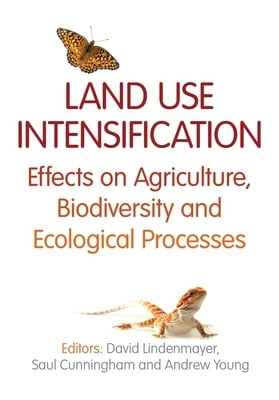
Land Use Intensification : Effects on Agriculture, Biodiversity and Ecological Processes

Overview
By 2050, the global population of humans is predicted to increase by 35%. Approximately 70 % more food may be required, and this will take place against a backdrop of 15-40% land degradation. This book examines land use intensification and biodiversity conservation and its impacts. It also discusses whether suites of species, and/or functional groups of taxa will either benefit of suffer from land use intensification and whether it is possible to make robust predictions of biotic responses across landscapes, regions and continents.
Customers Also Bought
- 1


Details
- ISBN-13: 9780643104075
- ISBN-10: 0643104070
- Publisher: CSIRO Publishing
- Publish Date: April 2013
- Page Count: 156
Related Categories
You May Also Like...
- 1




