menu
{ "item_title" : "Managing Corporate Reputation and Risk", "item_author" : [" Dale Neef "], "item_description" : "With the collapse of high-profile companies such as Enron and Tyco, worldwide anti-globalization protests, and recent revelations of questionable behavior by financial groups and auditors, corporate behavior has become the highest priority topic for businesspeople, investors, politicians and the public. Yet despite the critical importance of maintaining public and shareholder trust, most corporations make very little formal effort to actively manage the activities that can put their reputation, share price, and customer base at risk. Most corporations officially embrace the concept of Corporate Social Responsibility; but giving money away to local communities or worthy causes will not prevent an ethical disaster. The problem is not social irresponsibility; the problem is a lack of knowledge about what is taking place in the company or at its subcontractor sites. What companies need to be thinking about is not a theoretical construct around Corporate Social Responsibility, or how they can spin public opinion by charitable actions. They need to be thinking about how they can create a practical knowledge and risk management framework in their company that allows them to avoid costly and reputation-damaging behavior in the first place.Ultimately, this comes down to knowledge management. Whether violations of human rights, employment law, or environmental standards - or simply accounting shenanigans - invariably the reason that these activities are not anticipated and avoided is simply that executives and board members do not realize what is happening in the organization, and what the likely implications of actions will be. And the larger the organization, the more extensive that lack of knowledge. The good news is that developing a strategic approach to corporate integrity is neither exceptionally expensive nor particularly difficult. The problem is that companies that are already using", "item_img_path" : "https://covers3.booksamillion.com/covers/bam/1/13/846/353/1138463531_b.jpg", "price_data" : { "retail_price" : "265.00", "online_price" : "265.00", "our_price" : "265.00", "club_price" : "265.00", "savings_pct" : "0", "savings_amt" : "0.00", "club_savings_pct" : "0", "club_savings_amt" : "0.00", "discount_pct" : "10", "store_price" : "" } }
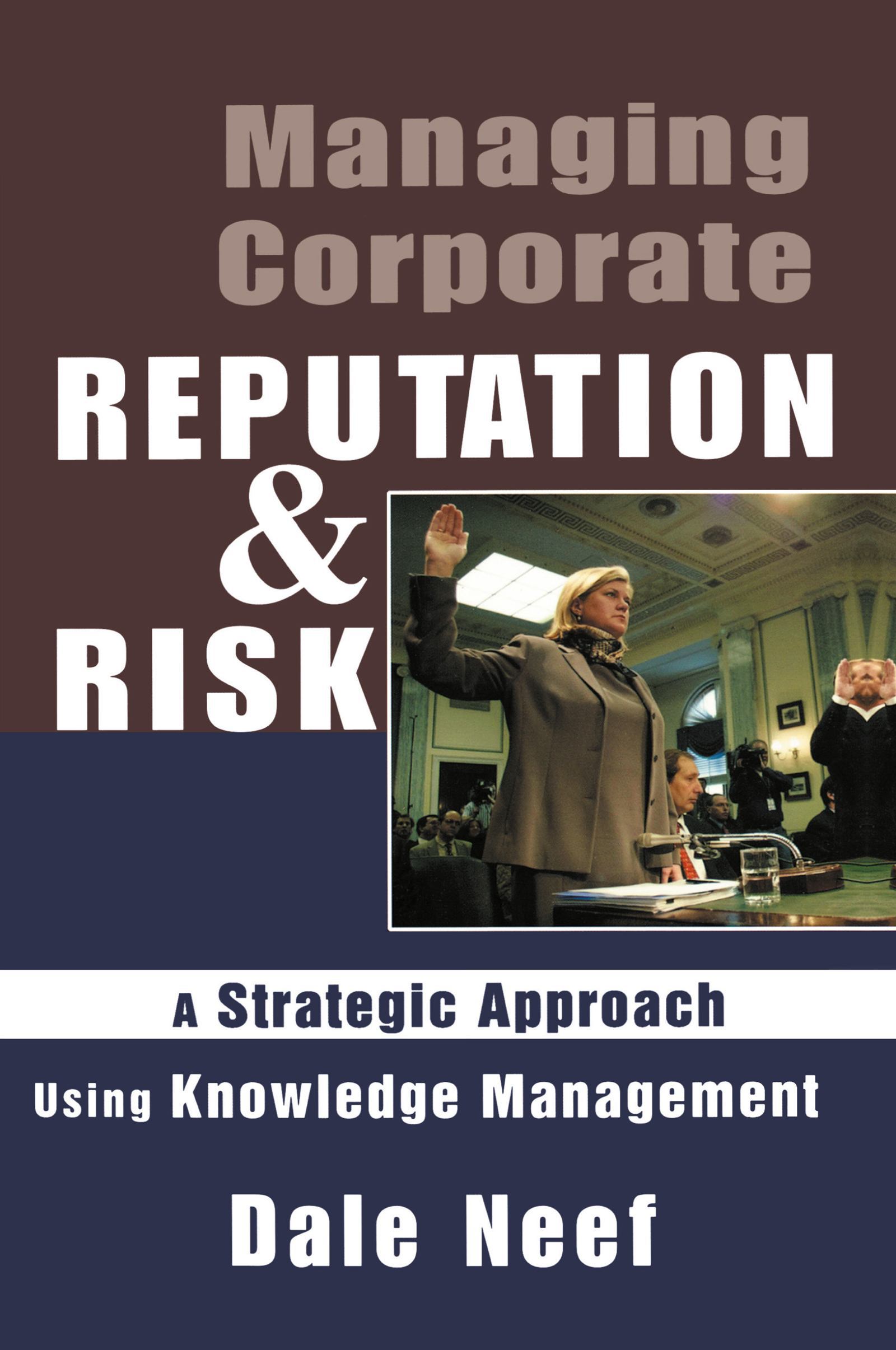
Managing Corporate Reputation and Risk|Dale Neef

Managing Corporate Reputation and Risk

local_shippingShip to Me
On Order. Usually ships in 2-4 weeks
FREE Shipping for Club Members help

Other Available Formats

Hardcover
265.00
Paperback
$67.99

show all formats

Overview

With the collapse of high-profile companies such as Enron and Tyco, worldwide anti-globalization protests, and recent revelations of questionable behavior by financial groups and auditors, corporate behavior has become the highest priority topic for businesspeople, investors, politicians and the public. Yet despite the critical importance of maintaining public and shareholder trust, most corporations make very little formal effort to actively manage the activities that can put their reputation, share price, and customer base at risk. Most corporations officially embrace the concept of Corporate Social Responsibility; but giving money away to local communities or worthy causes will not prevent an ethical disaster. The problem is not social irresponsibility; the problem is a lack of knowledge about what is taking place in the company or at its subcontractor sites. What companies need to be thinking about is not a theoretical construct around Corporate Social Responsibility, or how they can spin public opinion by charitable actions. They need to be thinking about how they can create a practical knowledge and risk management framework in their company that allows them to avoid costly and reputation-damaging behavior in the first place.Ultimately, this comes down to knowledge management. Whether violations of human rights, employment law, or environmental standards - or simply accounting shenanigans - invariably the reason that these activities are not anticipated and avoided is simply that executives and board members do not realize what is happening in the organization, and what the likely implications of actions will be. And the larger the organization, the more extensive that lack of knowledge. The good news is that developing a strategic approach to corporate integrity is neither exceptionally expensive nor particularly difficult. The problem is that companies that are already using

This item is Non-Returnable

Details

  • ISBN-13: 9781138463530
  • ISBN-10: 1138463531
  • Publisher: Routledge
  • Publish Date: August 2017
  • Page Count: 272

Related Categories

You May Also Like...

    1

BAM Customer Reviews