
menu
{ "item_title" : "Pathophysiology for Advanced Practice", "item_author" : [" M. Linda Workman", "John M. Clochesy "], "item_description" : "Designed for Learning. Grounded in Science. Built for Practice.This comprehensive, first-edition text, developed specifically for advanced practice education, explores the cellular and molecular mechanisms of disease, organ-specific pathologies, and multisystem disorders with an emphasis on evidence-based application.Students learn pathophysiology while simultaneously connecting it to related key concepts in pharmacology and assessment, enabling them to grasp not only what is happening in the body, but also how it intersects with the 3P cornerstones of clinical decision-making. This approach reinforces the interconnected nature of advanced practice knowledge and better prepares students to deliver optimal real-world patient care. Assessment Connection and Pharmacology Connection boxes link pathophysiology, pharmacology, and assessment concepts, helping students to tie together the 3Ps and understand how their integration supports precise, informed clinical decisions. Learning Outcomes are consistent with the relevant domains and outcomes advocated by the National Organization of Nurse Practitioner Faculty (NONPF) and Collegiate Commission on Nursing Education (CCNE) for competency-based graduate education. Clinical exemplars address how, where, and most importantly, why foundational concepts apply to clinical practice. Clinical Connection boxes inform how a pathophysiologic concept or process relates to clinical practice, including diagnostic reasoning and selection of management strategies. Patho Point and Physio Point boxes highlight important high-yield facts/ / Pediatric Point and Gero Point boxes identify key clinical considerations for populations across the lifespan. Social Determinants of Health boxes identify economic or other disparities that might impact access to or delivery of care. Genetic/Genomic Point boxes articulate how a specific genetic alteration or identified pattern of inheritance influences a diagnosis. Zebra lists detail unusual or rare conditions diagnosed and managed by specialists, but that the primary care practitioner should be aware of as a collaborator in clinical care. So, Why?/So You Know boxes explain complicated concepts using easy-to-grasp analogies or clinical application examples. ", "item_img_path" : "https://covers2.booksamillion.com/covers/bam/0/80/369/980/0803699808_b.jpg", "price_data" : { "retail_price" : "149.95", "online_price" : "149.95", "our_price" : "149.95", "club_price" : "149.95", "savings_pct" : "0", "savings_amt" : "0.00", "club_savings_pct" : "0", "club_savings_amt" : "0.00", "discount_pct" : "10", "store_price" : "" } }
Pathophysiology for Advanced Practice|M. Linda Workman

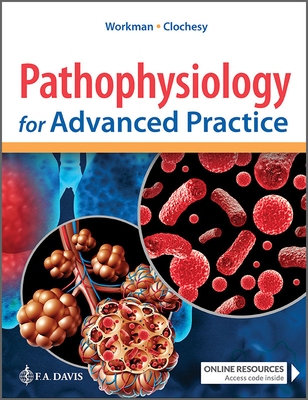
Pathophysiology for Advanced Practice

local_shippingShip to Me
On Order. Usually ships in 2-4 weeks
FREE Shipping for Club Members help

Overview

Designed for Learning. Grounded in Science. Built for Practice.

This comprehensive, first-edition text, developed specifically for advanced practice education, explores the cellular and molecular mechanisms of disease, organ-specific pathologies, and multisystem disorders with an emphasis on evidence-based application.

Students learn pathophysiology while simultaneously connecting it to related key concepts in pharmacology and assessment, enabling them to grasp not only what is happening in the body, but also how it intersects with the "3P" cornerstones of clinical decision-making. This approach reinforces the interconnected nature of advanced practice knowledge and better prepares students to deliver optimal real-world patient care.

  • "Assessment Connection" and "Pharmacology Connection" boxes link pathophysiology, pharmacology, and assessment concepts, helping students to tie together the 3Ps and understand how their integration supports precise, informed clinical decisions.
  • "Learning Outcomes" are consistent with the relevant domains and outcomes advocated by the National Organization of Nurse Practitioner Faculty (NONPF) and Collegiate Commission on Nursing Education (CCNE) for competency-based graduate education.
  • Clinical exemplars address how, where, and most importantly, why foundational concepts apply to clinical practice.
  • "Clinical Connection" boxes inform how a pathophysiologic concept or process relates to clinical practice, including diagnostic reasoning and selection of management strategies.
  • "Patho Point" and "Physio Point" boxes highlight important high-yield facts/ /
  • "Pediatric Point" and "Gero Point" boxes identify key clinical considerations for populations across the lifespan.
  • "Social Determinants of Health" boxes identify economic or other disparities that might impact access to or delivery of care.
  • "Genetic/Genomic Point" boxes articulate how a specific genetic alteration or identified pattern of inheritance influences a diagnosis.
  • "Zebra" lists detail unusual or rare conditions diagnosed and managed by specialists, but that the primary care practitioner should be aware of as a collaborator in clinical care.
  • "So, Why?/So You Know" boxes explain complicated concepts using easy-to-grasp analogies or clinical application examples.

This item is Non-Returnable

Details

  • ISBN-13: 9780803699809
  • ISBN-10: 0803699808
  • Publisher: F. A. Davis Company
  • Publish Date: February 2026
  • Dimensions: 10.96 x 8.73 x 2.18 inches
  • Shipping Weight: 6.84 pounds
  • Page Count: 1440

Related Categories

You May Also Like...

    1

BAM Customer Reviews

