menu
{ "item_title" : "Prediction of Soil Liquefaction Potential Using Soft Computing Methods", "item_author" : [" Vijay Kumar "], "item_description" : "Damages due to recent earthquakes (e.g., Kathmandu Earthquake in 2015; Sikkim Earthquake in 2011; Haiti Earthquake in 2010; Kashmir Earthquake in 2005; Indian Ocean Earthquake in 2004; Bhuj in 2001; etc.) in the 21st century have attracted many researchers and engineers to the seismic safety of densely populated cities. Past studies (e.g., Seed et al., 2001; Idriss & Boulanger, 2004; Tokimatsu & Yoshimi, 2006, etc.) suggest that one of the major factors that can influence the seismic safety of structures is liquefaction of soil, which depends upon site conditions. Soil profile above bed rock, water table location from ground level etc. plays an important role that can affect liquefaction behavior of soil. Zone-V of Prayagraj city is the worst-affected area due to liquefaction, whereas Zone IV is the least affected area. Therefore, anti-liquefaction measures should be taken up properly for vulnerable areas or zones. This study highlighted that developed models for different combinations can be used for predicting L.P. without using seismic data, i.e., earthquake magnitude, maximum horizontal acceleration, etc.", "item_img_path" : "https://covers2.booksamillion.com/covers/bam/6/20/847/921/6208479215_b.jpg", "price_data" : { "retail_price" : "122.00", "online_price" : "122.00", "our_price" : "122.00", "club_price" : "122.00", "savings_pct" : "0", "savings_amt" : "0.00", "club_savings_pct" : "0", "club_savings_amt" : "0.00", "discount_pct" : "10", "store_price" : "" } }
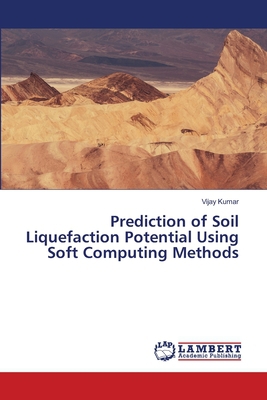
Prediction of Soil Liquefaction Potential Using Soft Computing Methods|Vijay Kumar

Prediction of Soil Liquefaction Potential Using Soft Computing Methods

local_shippingShip to Me
In Stock.
FREE Shipping for Club Members help

Overview

Damages due to recent earthquakes (e.g., Kathmandu Earthquake in 2015; Sikkim Earthquake in 2011; Haiti Earthquake in 2010; Kashmir Earthquake in 2005; Indian Ocean Earthquake in 2004; Bhuj in 2001; etc.) in the 21st century have attracted many researchers and engineers to the seismic safety of densely populated cities. Past studies (e.g., Seed et al., 2001; Idriss & Boulanger, 2004; Tokimatsu & Yoshimi, 2006, etc.) suggest that one of the major factors that can influence the seismic safety of structures is liquefaction of soil, which depends upon site conditions. Soil profile above bed rock, water table location from ground level etc. plays an important role that can affect liquefaction behavior of soil. Zone-V of Prayagraj city is the worst-affected area due to liquefaction, whereas Zone IV is the least affected area. Therefore, anti-liquefaction measures should be taken up properly for vulnerable areas or zones. This study highlighted that developed models for different combinations can be used for predicting L.P. without using seismic data, i.e., earthquake magnitude, maximum horizontal acceleration, etc.

This item is Non-Returnable

Details

  • ISBN-13: 9786208479213
  • ISBN-10: 6208479215
  • Publisher: LAP Lambert Academic Publishing
  • Publish Date: September 2025
  • Dimensions: 9 x 6 x 0.88 inches
  • Shipping Weight: 1.16 pounds
  • Page Count: 396

Related Categories

You May Also Like...

    1

BAM Customer Reviews