 Ask Bookie
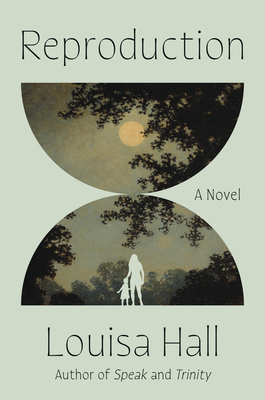
Reproduction

Other Available Formats
Overview
A lucid, genre-defying novel that explores the surreality of pregnancy, childbirth, and motherhood in a country in crisis
A novelist attempts to write a book about Mary Shelley, author of Frankenstein, a mother and artist whose harrowing pregnancies reveal the cost of human reproduction. Soon, however, the novelist's own painful experiences of pregnancy and childbirth, as well as her increasing awareness of larger threats from climate change to pandemic, force her to give up on the book and turn instead to writing a contemporary Frankenstein, based on the story of an old friend who mysteriously reappears in her life.
In telling a story that ranges from pregnancy to miscarriage to traumatic birth, from motherhood to the frontiers of reproductive science, Louisa Hall draws powerfully from her own experiences, as well as the stories of two other women: Mary Shelley and Anna, a scientist and would-be parent who is contemplating the possibilities, and morality, of genetic modification.
Both devastating and joyful, elegant and exacting, Reproduction is a powerful reminder of the hazards and the rewards involved in creating new life, and a profoundly feminist exploration of motherhood, female friendship, and artistic ambition.
Customers Also Bought
- 1


Details
- ISBN-13: 9780063283626
- ISBN-10: 006328362X
- Publisher: Ecco Press
- Publish Date: June 2023
- Dimensions: 8.51 x 5.86 x 0.77 inches
- Shipping Weight: 0.64 pounds
- Page Count: 224
Related Categories
You May Also Like...
- 1




Louisa Hall’s fourth book, Reproduction, brings together many threads—the COVID-19 pandemic, Mary Shelley, Frankenstein, friendship, pregnancy, miscarriage and birthing trauma—within a novel about trying to create a novel, about literary and scientific discovery and, most importantly, about a woman trying to write her way back to herself. Hall’s unnamed narrator sets out to write a novel about Mary Shelley and Frankenstein with the intention of engaging with the book’s literary history. During the research process, she discovers how miscarriage and pregnancy haunted Shelley and her novel. As our narrator navigates her own crises surrounding pregnancy—her experiences with it as well as her feelings about it amid the political, societal, health and climate challenges of our day—she realizes that perhaps this is not the novel she needs to write. Instead, she borrows the frame structure of Frankenstein to launch and linger in a tale of herself and her newly reappeared friend Anna, a scientist who works in a lab, wants to have a child and is willing to explore genetic modification and all the questions, ethics, opportunities and challenges that come with it. Amid these large and lofty questions, Hall’s prose is taut, each word impactful, each short chapter a meditation on what could be. Throughout this slim novel, she continually returns to the evolving conversation between art and science, and to the enduring truth that no action or reaction exists in a vacuum. Hall doesn’t always provide reasons for what happens in Reproduction. Instead, the novel is a series of what-ifs, possibilities, surprises and moments of wonder. These short chapters build a complex web of interconnectivity, showing the ways that our actions are shaped by the threats of pandemic and climate change as well as the politics, bounds and potential of scientific inquiry.
Louisa Hall’s fourth book, Reproduction, brings together many threads—the COVID-19 pandemic, Mary Shelley, Frankenstein, friendship, pregnancy, miscarriage and birthing trauma—within a novel about trying to create a novel, about literary and scientific discovery and, most importantly, about a woman trying to write her way back to herself. Hall’s unnamed narrator sets out to write a novel about Mary Shelley and Frankenstein with the intention of engaging with the book’s literary history. During the research process, she discovers how miscarriage and pregnancy haunted Shelley and her novel. As our narrator navigates her own crises surrounding pregnancy—her experiences with it as well as her feelings about it amid the political, societal, health and climate challenges of our day—she realizes that perhaps this is not the novel she needs to write. Instead, she borrows the frame structure of Frankenstein to launch and linger in a tale of herself and her newly reappeared friend Anna, a scientist who works in a lab, wants to have a child and is willing to explore genetic modification and all the questions, ethics, opportunities and challenges that come with it. Amid these large and lofty questions, Hall’s prose is taut, each word impactful, each short chapter a meditation on what could be. Throughout this slim novel, she continually returns to the evolving conversation between art and science, and to the enduring truth that no action or reaction exists in a vacuum. Hall doesn’t always provide reasons for what happens in Reproduction. Instead, the novel is a series of what-ifs, possibilities, surprises and moments of wonder. These short chapters build a complex web of interconnectivity, showing the ways that our actions are shaped by the threats of pandemic and climate change as well as the politics, bounds and potential of scientific inquiry.