menu
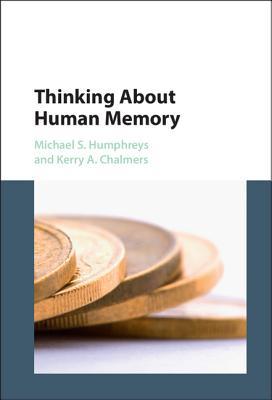
{ "item_title" : "Thinking About Human Memory", "item_author" : [" Michael S. Humphreys", "Kerry A. Chalmers "], "item_description" : "Thinking About Human Memory provides a novel analytical approach to understanding memory that considers the goals of the memory task, the cues and information available, the opportunity to learn, and interference from irrelevant information (noise). Each of the five chapters describing this approach introduces historical ideas and demonstrates how current thinking both differs from and is derived from them. These chapters also contain analyses of current problems designed to demonstrate the power of the approach. In a subsequent chapter, the authors discuss how memory is controlled by the environment, by others, and by ourselves, and then apply their insights to the problem solving of children, our hominin ancestors, and scrub jays. Finally, the questions of how to define episodic memory and how to investigate phylogenetic and developmental changes in memory are addressed. This book will appeal to memory researchers, including applied researchers, and advanced students.", "item_img_path" : "https://covers2.booksamillion.com/covers/bam/1/10/708/714/1107087147_b.jpg", "price_data" : { "retail_price" : "145.00", "online_price" : "145.00", "our_price" : "145.00", "club_price" : "145.00", "savings_pct" : "0", "savings_amt" : "0.00", "club_savings_pct" : "0", "club_savings_amt" : "0.00", "discount_pct" : "10", "store_price" : "" } }
Thinking About Human Memory|Michael S. Humphreys

Thinking About Human Memory

local_shippingShip to Me
In Stock.
FREE Shipping for Club Members help

Overview

Thinking About Human Memory provides a novel analytical approach to understanding memory that considers the goals of the memory task, the cues and information available, the opportunity to learn, and interference from irrelevant information (noise). Each of the five chapters describing this approach introduces historical ideas and demonstrates how current thinking both differs from and is derived from them. These chapters also contain analyses of current problems designed to demonstrate the power of the approach. In a subsequent chapter, the authors discuss how memory is controlled by the environment, by others, and by ourselves, and then apply their insights to the problem solving of children, our hominin ancestors, and scrub jays. Finally, the questions of how to define episodic memory and how to investigate phylogenetic and developmental changes in memory are addressed. This book will appeal to memory researchers, including applied researchers, and advanced students.

This item is Non-Returnable

Details

  • ISBN-13: 9781107087149
  • ISBN-10: 1107087147
  • Publisher: Cambridge University Press
  • Publish Date: March 2016
  • Dimensions: 9 x 6 x 0.56 inches
  • Shipping Weight: 1.07 pounds
  • Page Count: 238

Related Categories

You May Also Like...

    1

BAM Customer Reviews