 Ask Bookie

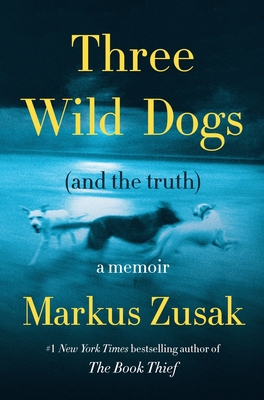
Three Wild Dogs (and the Truth) : A Memoir

Other Available Formats
Overview
WINNER OF THE AUSTRALIAN INDIE BOOK AWARD FOR NONFICTION
"Playful and poignant . . . will be enjoyed by readers of the best dog tales, such as The Art of Racing in the Rain, for its ability to evoke both the aggravation and deep love that dogs foster."--BookPage
In this poignant, funny, and disarmingly honest memoir, one of the world's most beloved storytellers, the number one New York Times bestselling author of The Book Thief, tells of his family's adoption of three troublesome rescue dogs--a charming and courageous love story about making even the most incorrigible animals family.
There's a madman dog beside me, and the hounds of memory ahead of us . . . It's love and beasts and wild mistakes, and regret, but never to change things.
What happens when the Zusak family opens their home to three big, wild, street-hardened dogs--Reuben, more wolf than hound; Archer, blond, beautiful, destructive; and the rancorously smiling Frosty, who walks like a rolling thunderstorm?
The answer can only be chaos: There are street fights, park fights, public shamings, property damages, injuries, hospital visits, wellness checks, pure comedy, shocking tragedy, and carnage that must be read to be believed.
There is a reckoning of shortcomings and failure, a strengthening of will, but most important of all, an explosion of love--and the joy and recognition of family.
Three Wild Dogs (and the Truth) is a tender, motley, and exquisitely written memoir about the human need for both connection and disorder, a love letter to the animals who bring hilarity and beauty--but also the visceral truth of the natural world--straight to our doors and into our lives and change us forever.
Customers Also Bought
- 1


Details
- ISBN-13: 9780063426078
- ISBN-10: 0063426072
- Publisher: Harper
- Publish Date: January 2025
- Dimensions: 9.28 x 6.39 x 0.96 inches
- Shipping Weight: 0.91 pounds
- Page Count: 240
Related Categories
You May Also Like...
- 1


No matter how much chaos they wreak or how catastrophic the destruction they leave in their wake, dogs can wriggle their way out of a scolding simply by casting an innocent glance or woeful expression at their owners. The truth, as Markus Zusak (The Book Thief) reveals in his playful and poignant memoir, Three Wild Dogs (and the Truth), is that owners love their canine companions no matter how incorrigible they are. With affection and some exasperation, Zusak recalls the highlights and lowlights of life with Reuben, Archer and Frosty—the three boisterous rescue dogs who, one by one, swagger into his family’s life. The bulk of the book chronicles the misadventures of Reuben and Archer, “essentially a two-dog mafia” who terrorize the dog park with a playfulness under which lurks the animal instinct to kill. In the most harrowing moment, Reuben knocks Zusak down, breaking his knee. Reuben and Archer corner a possum in a local park and kill it; they kill the family cat; they bite the piano teacher. At the same time, the dogs are often perfect companions: They lavish affection on the Zusak children, Kitty and Noah, and slow their pace when the children are walking them. The family is overcome with misery and pain when the two dogs fall ill and die—Reuben in 2019, Archer in 2021. “There are terrible and poetic things in our lives,” writes Zusak, “and so often they’re one and the same.” Following the “dogless drought of 2021,” the family adopts another rescue dog, Frosty. Though sometimes “ADHD on legs,” Frosty slept at Zusak’s feet as he wrote this book. Despite the many challenges Zusak and his family faced with their burdensome beasts, Zusak tenderly recalls that “on account of our many animals, we’ve lived a beautiful, brutal, awful, hilarious, escapadical life.” Telling these stories gives Zusak reason to meditate on his own nature. He reflects that Reuben and Archer, especially, “were dogs who somehow made me. . . . They were a mirror, I suspect, to my own hidden turmoils—my wilderness within.” Though it sometimes overreaches for humor, Three Wild Dogs (and the Truth) will be enjoyed by readers of the best dog tales, such as The Art of Racing in the Rain, for its ability to evoke both the aggravation and deep love that dogs foster in those who build their lives around these creatures.
No matter how much chaos they wreak or how catastrophic the destruction they leave in their wake, dogs can wriggle their way out of a scolding simply by casting an innocent glance or woeful expression at their owners. The truth, as Markus Zusak (The Book Thief) reveals in his playful and poignant memoir, Three Wild Dogs (and the Truth), is that owners love their canine companions no matter how incorrigible they are. With affection and some exasperation, Zusak recalls the highlights and lowlights of life with Reuben, Archer and Frosty—the three boisterous rescue dogs who, one by one, swagger into his family’s life. The bulk of the book chronicles the misadventures of Reuben and Archer, “essentially a two-dog mafia” who terrorize the dog park with a playfulness under which lurks the animal instinct to kill. In the most harrowing moment, Reuben knocks Zusak down, breaking his knee. Reuben and Archer corner a possum in a local park and kill it; they kill the family cat; they bite the piano teacher. At the same time, the dogs are often perfect companions: They lavish affection on the Zusak children, Kitty and Noah, and slow their pace when the children are walking them. The family is overcome with misery and pain when the two dogs fall ill and die—Reuben in 2019, Archer in 2021. “There are terrible and poetic things in our lives,” writes Zusak, “and so often they’re one and the same.” Following the “dogless drought of 2021,” the family adopts another rescue dog, Frosty. Though sometimes “ADHD on legs,” Frosty slept at Zusak’s feet as he wrote this book. Despite the many challenges Zusak and his family faced with their burdensome beasts, Zusak tenderly recalls that “on account of our many animals, we’ve lived a beautiful, brutal, awful, hilarious, escapadical life.” Telling these stories gives Zusak reason to meditate on his own nature. He reflects that Reuben and Archer, especially, “were dogs who somehow made me. . . . They were a mirror, I suspect, to my own hidden turmoils—my wilderness within.” Though it sometimes overreaches for humor, Three Wild Dogs (and the Truth) will be enjoyed by readers of the best dog tales, such as The Art of Racing in the Rain, for its ability to evoke both the aggravation and deep love that dogs foster in those who build their lives around these creatures.