menu
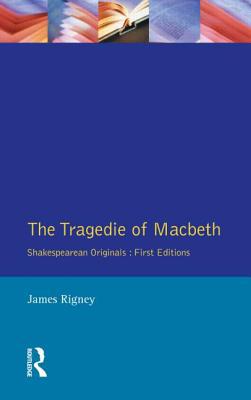
{ "item_title" : "The Tragedie of Macbeth", "item_author" : [" James Rigney "], "item_description" : "The Tragedie of Macbeth was composed somewhere between 1603 and 1606 and was first published by Heminge and Condell as the seventh play in the Tragedies section of their First Folio of 1623. The Folio text is thus the only authoritative text of the play and has been the basis of all later editions. Though relatively well-printed and with comparatively few instances of verbal corruption or compositorial error this Folio text has generally been seen as an unsatisfactory one. Macbeth is one of the shortest of Shakespeare's plays and as A. C. Bradley observed in Shakespearean Tragedy it is the most vehement and concentrated of the tragedies. Within this brief structure there are signs that additions, revisions and cuts have been made, and the textual problems of the play have been attributed to the signs of re-handling revealed in its structure. This edition of the play, removing the additions and mediations of Shakespeare's editors, presents a play that suggests the potentiality of the Shakespearean original. Macbeth is a powerfully theatrical text: this theatricality is found in its brevity and its fluidity of form, and in the history of the editorial treatment of its text. To the extent that Macbeth reveals its origins in circumstances where a variety of venues and occasions called for fluid and easily alterable texts and where collaboration with, and revision by, other writers characterized a system of production quite different from the notions of authorship that were to develop and be codified in the eighteenth century, to that extent, Macbeth challenges the notions of authority that have been invested in the First Folio.", "item_img_path" : "https://covers2.booksamillion.com/covers/bam/0/13/355/439/0133554392_b.jpg", "price_data" : { "retail_price" : "54.99", "online_price" : "54.99", "our_price" : "54.99", "club_price" : "54.99", "savings_pct" : "0", "savings_amt" : "0.00", "club_savings_pct" : "0", "club_savings_amt" : "0.00", "discount_pct" : "10", "store_price" : "" } }
The Tragedie of Macbeth|James Rigney

The Tragedie of Macbeth : The Folio of 1623

local_shippingShip to Me
In Stock.
FREE Shipping for Club Members help

Overview

The Tragedie of Macbeth was composed somewhere between 1603 and 1606 and was first published by Heminge and Condell as the seventh play in the Tragedies section of their First Folio of 1623. The Folio text is thus the only authoritative text of the play and has been the basis of all later editions. Though relatively well-printed and with comparatively few instances of verbal corruption or compositorial error this Folio text has generally been seen as an unsatisfactory one. Macbeth is one of the shortest of Shakespeare's plays and as A. C. Bradley observed in Shakespearean Tragedy it is the most vehement and concentrated of the tragedies. Within this brief structure there are signs that additions, revisions and cuts have been made, and the textual problems of the play have been attributed to the signs of re-handling revealed in its structure. This edition of the play, removing the additions and mediations of Shakespeare's editors, presents a play that suggests the potentiality of the Shakespearean original. Macbeth is a powerfully theatrical text: this theatricality is found in its brevity and its fluidity of form, and in the history of the editorial treatment of its text. To the extent that Macbeth reveals its origins in circumstances where a variety of venues and occasions called for fluid and easily alterable texts and where collaboration with, and revision by, other writers characterized a system of production quite different from the notions of authorship that were to develop and be codified in the eighteenth century, to that extent, Macbeth challenges the notions of authority that have been invested in the First Folio.

This item is Non-Returnable

Details

  • ISBN-13: 9780133554397
  • ISBN-10: 0133554392
  • Publisher: Routledge
  • Publish Date: July 1996
  • Dimensions: 7.81 x 5.12 x 0.4 inches
  • Shipping Weight: 0.32 pounds
  • Page Count: 128

Related Categories

You May Also Like...

    1

BAM Customer Reviews