menu
{ "item_title" : "Two Trains Running", "item_author" : [" Matthieu Wagemaker "], "item_description" : "Bern, Berlin, Bruxelles, Frankfurt/M., New York, Wien. European University Studies: Series 23, Theology, Vol. 676 Between 1966 and 1981 an enormous effort has been made by the Anglican Roman Catholic International Commission (ARCIC I) to overcome differences in the understanding and practice of the Christian Faith. Four major theological texts, based on the idea of resourcement, were published together as the Final Report in 1981. Why were the high ecumenical expectations of the seventies not fulfilled? At the same time the Anglican churches began to discuss openly the possibility of ordaining women to the priesthood. The Anglican discussion had clear repercussions for the Catholic Church. This study investigates the relations that existed between these debates and the reception of the Final Report. It pays particular attention to the developments of the understanding about authority in the Church. Authority in the Church comprises hermeneutical, foundation theological, christological and ecclesiological notions. ARCIC worked with its own conception of authority in matters of faith and order, and it proposed a certain understanding of episcopal collegiality as the corner stone for 'organic union'. The book infers that the debates on the ordination of women have led to developments in the understanding of authority in the Catholic Church and the Anglican Churches that diverge from what ARCIC did and proposed. The consequences for ecumenical relations between the Anglican Communion and the Catholic Church are explored. Contents: 'Two Trains Running' investigates the relation between the reception of ARCIC's Final Report and the debates on the ordination of women. It is divided into threeparts. The first part deals with the understanding of authority in the Church by ARCIC. The second part is dedicated to the history and synthesis of the debate on the ordination of women in the Anglican Communion, especially the Church of England. The third part discusses the developments of this issue in the Catholic Church. The book concludes with an exploration of the possible ecumenical future for Anglicans and Catholics. '. . .this is a measured and useful study.. . .] It provides a wealth of documentation for the ecumenical scholar and an important hypothesis that should deepen work on authority in all the ecumenical dialogues. It is an important reference for any theological work and essential for the ecumenical scholar.' (Jeffrey Gros, Journal of Ecumenical Studies)", "item_img_path" : "https://covers2.booksamillion.com/covers/bam/0/82/044/618/0820446181_b.jpg", "price_data" : { "retail_price" : "64.95", "online_price" : "64.95", "our_price" : "64.95", "club_price" : "64.95", "savings_pct" : "0", "savings_amt" : "0.00", "club_savings_pct" : "0", "club_savings_amt" : "0.00", "discount_pct" : "10", "store_price" : "" } }
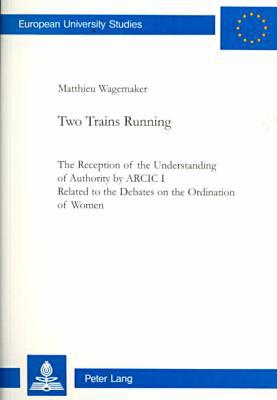
Two Trains Running|Matthieu Wagemaker

Two Trains Running : The Reception of the Understanding of Authority by Arcic I Related to the Debates on the Ordination of Women

local_shippingShip to Me
On Order. Usually ships in 2-4 weeks
FREE Shipping for Club Members help

Overview

Bern, Berlin, Bruxelles, Frankfurt/M., New York, Wien. European University Studies: Series 23, Theology, Vol. 676 Between 1966 and 1981 an enormous effort has been made by the Anglican Roman Catholic International Commission (ARCIC I) to overcome differences in the understanding and practice of the Christian Faith. Four major theological texts, based on the idea of resourcement, were published together as the Final Report in 1981. Why were the high ecumenical expectations of the seventies not fulfilled? At the same time the Anglican churches began to discuss openly the possibility of ordaining women to the priesthood. The Anglican discussion had clear repercussions for the Catholic Church. This study investigates the relations that existed between these debates and the reception of the Final Report. It pays particular attention to the developments of the understanding about authority in the Church. Authority in the Church comprises hermeneutical, foundation theological, christological and ecclesiological notions. ARCIC worked with its own conception of authority in matters of faith and order, and it proposed a certain understanding of episcopal collegiality as the corner stone for 'organic union'. The book infers that the debates on the ordination of women have led to developments in the understanding of authority in the Catholic Church and the Anglican Churches that diverge from what ARCIC did and proposed. The consequences for ecumenical relations between the Anglican Communion and the Catholic Church are explored. Contents: 'Two Trains Running' investigates the relation between the reception of ARCIC's Final Report and the debates on the ordination of women. It is divided into threeparts. The first part deals with the understanding of authority in the Church by ARCIC. The second part is dedicated to the history and synthesis of the debate on the ordination of women in the Anglican Communion, especially the Church of England. The third part discusses the developments of this issue in the Catholic Church. The book concludes with an exploration of the possible ecumenical future for Anglicans and Catholics. '. . .this is a measured and useful study. . . .] It provides a wealth of documentation for the ecumenical scholar and an important hypothesis that should deepen work on authority in all the ecumenical dialogues. It is an important reference for any theological work and essential for the ecumenical scholar.' (Jeffrey Gros, Journal of Ecumenical Studies)

This item is Non-Returnable

Details

  • ISBN-13: 9780820446189
  • ISBN-10: 0820446181
  • Publisher: Peter Lang Publishing
  • Publish Date: January 1999
  • Page Count: 507

Related Categories

You May Also Like...

    1

BAM Customer Reviews