menu
{ "item_title" : "Water", "item_author" : [" Environmental Protection Agency "], "item_description" : "There are approximately 160,000 public drinking water utilities and more than 16,000 wastewater utilities in the United States. About 84 percent of the U.S. population receives its potable water from these drinking water utilities and more than 75 percent has its sanitary sewage treated by these wastewater utilities. The drinking water and wastewater sector (Water Sector) is vulnerable to a variety of attacks, including contamination with deadly agents and physical and cyber attacks. If these attacks were to occur, the result could be large numbers of illnesses or casualties or denial of service that would also affect public health and economic vitality. Critical services such as firefighting and health care (hospitals), and other dependent and interdependent sectors such as energy, transportation, and food and agriculture, would suffer negative impacts from a denial of Water Sector service. In collaboration with the entire sector, a broad-based strategy to address security needs is being implemented. This work includes providing support to utilities by preparing vulnerability assessment and emergency response tools, providing technical and financial assistance, and exchanging information. Each section of the Water Sector-Specific Plan (SSP), as defined by the Department of Homeland Security (DHS) in its 2006 Sector-Specific Plan Guidance, is described below.", "item_img_path" : "https://covers1.booksamillion.com/covers/bam/1/50/310/660/1503106608_b.jpg", "price_data" : { "retail_price" : "16.99", "online_price" : "16.99", "our_price" : "16.99", "club_price" : "16.99", "savings_pct" : "0", "savings_amt" : "0.00", "club_savings_pct" : "0", "club_savings_amt" : "0.00", "discount_pct" : "10", "store_price" : "" } }
Water|Environmental Protection Agency

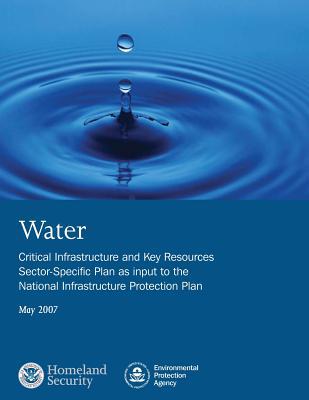
Water : Critical Infrastructure and Key Resources Sector-Specific Plan as input to the National Infrastructure Protection Plan: May 2007

local_shippingShip to Me
In Stock.
FREE Shipping for Club Members help

Overview

There are approximately 160,000 public drinking water utilities and more than 16,000 wastewater utilities in the United States. About 84 percent of the U.S. population receives its potable water from these drinking water utilities and more than 75 percent has its sanitary sewage treated by these wastewater utilities. The drinking water and wastewater sector (Water Sector) is vulnerable to a variety of attacks, including contamination with deadly agents and physical and cyber attacks. If these attacks were to occur, the result could be large numbers of illnesses or casualties or denial of service that would also affect public health and economic vitality. Critical services such as firefighting and health care (hospitals), and other dependent and interdependent sectors such as energy, transportation, and food and agriculture, would suffer negative impacts from a denial of Water Sector service. In collaboration with the entire sector, a broad-based strategy to address security needs is being implemented. This work includes providing support to utilities by preparing vulnerability assessment and emergency response tools, providing technical and financial assistance, and exchanging information. Each section of the Water Sector-Specific Plan (SSP), as defined by the Department of Homeland Security (DHS) in its 2006 Sector-Specific Plan Guidance, is described below.

This item is Non-Returnable

Details

  • ISBN-13: 9781503106604
  • ISBN-10: 1503106608
  • Publisher: Createspace Independent Publishing Platform
  • Publish Date: December 2014
  • Dimensions: 11.02 x 8.5 x 0.29 inches
  • Shipping Weight: 0.72 pounds
  • Page Count: 134

Related Categories

You May Also Like...

    1

BAM Customer Reviews