menu
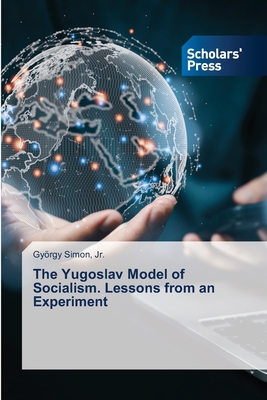
{ "item_title" : "The Yugoslav Model of Socialism. Lessons from an Experiment", "item_author" : [" Jr. György Simon "], "item_description" : "In the second half of the 20th century, a bloc of socialist countries emerged under the leadership of the Soviet Union and existed mostly in Eastern Europe for more than four decades. Most of these countries generally followed the Soviet state-guided model of socialist construction. Yugoslavia by accomplishing in essence independently a people's democratic revolution found its own development path. After the Second World War, the Yugoslavs, aspiring to develop its own version of market socialism with an active participation in international economic relations, created a unique self-regulating socialist economy. For an econometric analysis, apart from neoclassical growth models, an endogenous general model of a Kaldorian type is used here, with a built-in mechanism of technical progress. It considers not only physical and human capital but also time as an event space of creative economic activity. This model made possible the comparison of the Yugoslav economy's joint factor efficiency with the world level and revealed a braking mechanism in its functioning. The monograph is based on a rich factual material, partly introduced into scientific usage for the first time.", "item_img_path" : "https://covers1.booksamillion.com/covers/bam/6/20/677/310/6206773108_b.jpg", "price_data" : { "retail_price" : "114.00", "online_price" : "114.00", "our_price" : "114.00", "club_price" : "114.00", "savings_pct" : "0", "savings_amt" : "0.00", "club_savings_pct" : "0", "club_savings_amt" : "0.00", "discount_pct" : "10", "store_price" : "" } }
The Yugoslav Model of Socialism. Lessons from an Experiment|Jr. György Simon

The Yugoslav Model of Socialism. Lessons from an Experiment

local_shippingShip to Me
In Stock.
FREE Shipping for Club Members help

Overview

In the second half of the 20th century, a bloc of socialist countries emerged under the leadership of the Soviet Union and existed mostly in Eastern Europe for more than four decades. Most of these countries generally followed the Soviet state-guided model of socialist construction. Yugoslavia by accomplishing in essence independently a people's democratic revolution found its own development path. After the Second World War, the Yugoslavs, aspiring to develop its own version of market socialism with an active participation in international economic relations, created a unique self-regulating socialist economy. For an econometric analysis, apart from neoclassical growth models, an endogenous general model of a Kaldorian type is used here, with a built-in mechanism of technical progress. It considers not only physical and human capital but also time as an event space of creative economic activity. This model made possible the comparison of the Yugoslav economy's joint factor efficiency with the world level and revealed a braking mechanism in its functioning. The monograph is based on a rich factual material, partly introduced into scientific usage for the first time.

This item is Non-Returnable

Details

  • ISBN-13: 9786206773108
  • ISBN-10: 6206773108
  • Publisher: Scholars' Press
  • Publish Date: July 2024
  • Dimensions: 9 x 6 x 0.67 inches
  • Shipping Weight: 0.97 pounds
  • Page Count: 300

Related Categories

You May Also Like...

    1

BAM Customer Reviews